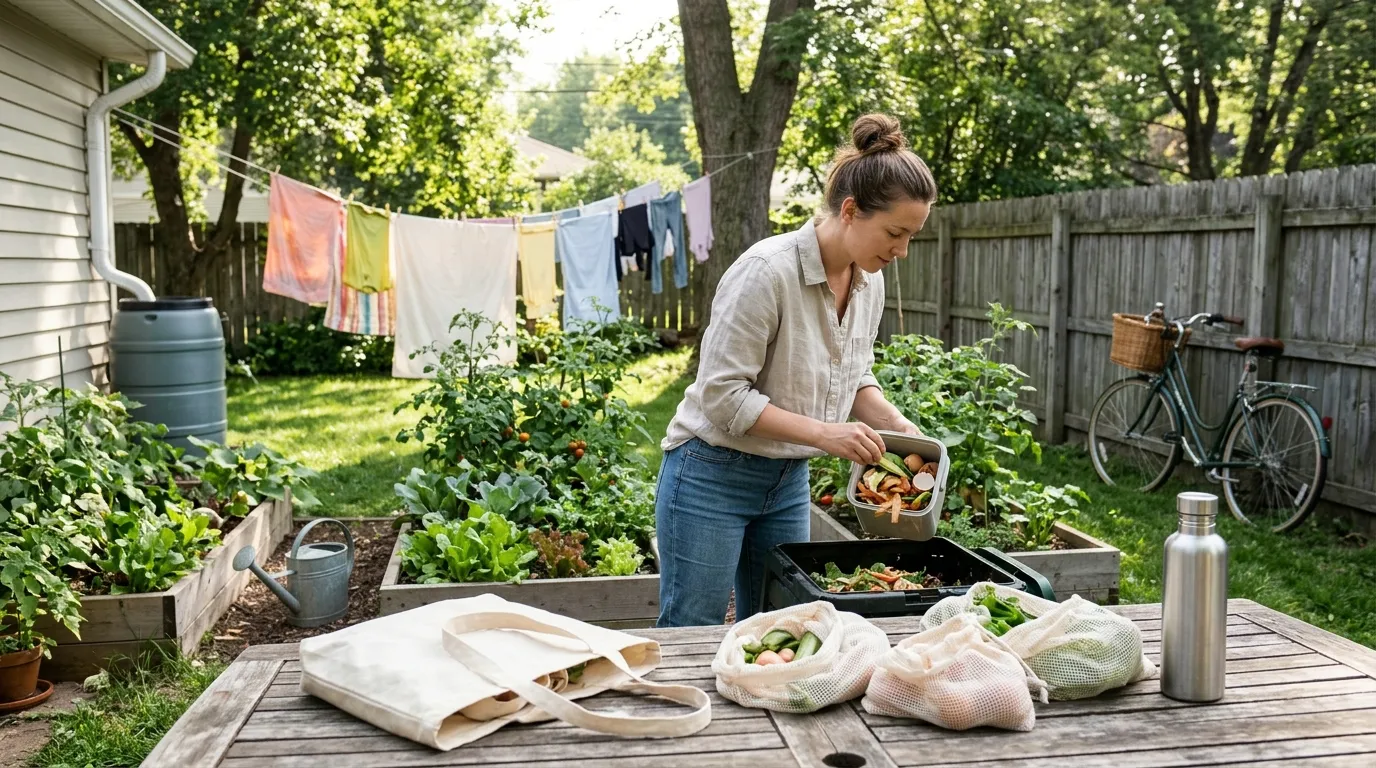
Sustainable living is often portrayed as an all-or-nothing lifestyle requiring drastic, expensive sacrifices. In reality, true sustainability is cumulative. Reducing your environmental impact does not mean abandoning modern conveniences; rather, it is about making intentional, everyday choices that minimize waste, conserve natural resources, and lower your carbon footprint over time.
By shifting your focus from perfection to consistency, you can build eco-friendly habits that protect the environment while often saving money and improving your personal health.
Why Sustainable Living Matters
Every item we buy, energy we consume, and waste we discard interacts with a global ecosystem. Adopting sustainable practices yields compounding benefits:
- Resource Conservation: Minimizing single-use plastics and conserving water preserves finite natural resources for future generations.
- Waste Reduction: Landfills are overflowing with discarded goods; shifting toward circular consumption habits keeps materials in use longer.
- Financial Savings: Many sustainable habits—such as reducing food waste, conserving home energy, and buying fewer, higher-quality goods—directly reduce your monthly living expenses.
Four Key Pillars of Sustainable Living
1. Mindful Consumption & Waste Reduction
The most sustainable product is the one that is never manufactured. Shifting how you purchase goods is the single most effective way to lower your impact.
- Refuse Single-Use Plastics: Swap single-use grocery bags, plastic water bottles, and disposable cutlery for durable, reusable alternatives made from stainless steel, glass, or cloth.
- Adopt the "Buy It For Life" (BIFL) Mindset: Instead of buying cheap, disposable items that break within months and end up in landfills, invest in durable, repairable goods designed to last for years.
- Embrace the Circular Economy: Prioritize thrift shopping, buying secondhand furniture, and repairing broken appliances or clothing rather than immediately replacing them.
2. Energy Efficiency & Climate Consciousness
How you power and heat your home significantly influences your personal carbon footprint.
- Optimize Home Temperature: Adjust your thermostat by just 2 degrees (cooler in winter, warmer in summer) to noticeably reduce your monthly energy consumption.
- Switch to LED Lighting: Replace traditional incandescent bulbs with energy-efficient LEDs, which use up to 90% less electricity and last decades longer.
- Unplug Vampire Electronics: Devices plugged into outlets (like chargers, game consoles, and entertainment systems) draw "phantom load" energy even when turned off. Use smart power strips to cut power completely when not in use.
3. Sustainable Eating & Food Waste Management
Food production is one of the largest drivers of global greenhouse gas emissions and water use.
- Combat Food Waste: Plan your meals weekly, store produce correctly to extend freshness, and repurpose leftovers. Roughly 30% to 40% of the global food supply is wasted.
- Incorporate Plant-Forward Meals: You do not need to become a strict vegan to make an impact. Simply swapping out red meat for plant-based proteins a few times a week substantially reduces your water and carbon footprint.
- Shop Local and Seasonal: Buying from local farmers' markets cuts down on the carbon emissions associated with transporting food thousands of miles across the globe.
4. Conscious Mobility & Transportation
Vehicle emissions account for a massive share of urban air pollution and household carbon output.
- Consolidate Trips: Group your errands into a single weekly trip rather than driving out multiple times, or combine carpooling with coworkers.
- Embrace Active Transport: For short trips under two miles, walking or cycling eliminates emissions entirely while improving your daily physical health.
- Optimize Public Transit: Utilize buses, trains, or subways for your daily commute whenever infrastructure allows.
Comparison of Eco-Friendly Swaps vs. Traditional Habits
| Traditional Habit | Sustainable Alternative | Environmental & Financial Impact |
|---|---|---|
| Buying bottled water daily | Reusable stainless steel bottle + home filter | Eliminates hundreds of single-use plastics annually and saves hundreds of dollars. |
| Throwing away bruised produce | Freezing or composting scraps / meal planning | Cuts household food waste and lowers methane emissions in landfills. |
| Driving short distances for single errands | Walking, cycling, or batching errands | Reduces carbon emissions, lowers fuel costs, and increases daily movement. |
| Replacing cheap fast-fashion items frequently | Buying durable, versatile wardrobe staples | Decreases textile waste and water consumption required for garment manufacturing. |
Step-by-Step Guide to Starting Your Sustainable Journey
- Conduct a Waste Audit: For one week, observe what you throw away the most—is it single-use coffee cups, plastic packaging, or wasted leftover food? Target your first change at your biggest waste contributor.
- Implement One Habit at a Time: Do not try to change everything overnight. Pick a single habit (like carrying reusable shopping bags or turning off lights in empty rooms) and stick to it for two weeks before adding another.
- Focus on Reduction Over Perfection: Zero-waste perfection is an illusion. Every plastic bag you refuse and every meal you rescue matters, even if your routine isn't flawless.
- Vote With Your Wallet: Support companies and brands that utilize transparent supply chains, ethical labor practices, and eco-friendly packaging.
Frequently Asked Questions (FAQ)
Is living sustainably expensive? While certain upfront purchases (like high-efficiency appliances or organic clothing) can cost more initially, sustainable living generally saves money over time. Buying less, wasting less food, lowering utility bills, and repairing goods instead of replacing them reduces your overall cost of living.
What is the single most impactful change I can make? From a carbon footprint perspective, reducing food waste, minimizing air travel, eating a plant-forward diet, and reducing personal car usage yield the largest measurable reductions in greenhouse gas emissions.
How can I avoid greenwashing when buying eco-friendly products? Be wary of vague buzzwords like "eco-friendly," "natural," or "green" plastered on packaging without proof. Look for credible, third-party certifications such as USDA Organic, Fair Trade Certified, B Corporation (B-Corp), or ENERGY STAR.
Does recycling actually make a difference? Yes, but it is the last line of defense, not the first. The waste management hierarchy prioritizes Reduce and Reuse far above Recycle. Contaminated recycling bins often end up in landfills, making source reduction much more effective than relying on recycling plants alone.
Sources & Further Reference
- U.S. Environmental Protection Agency (EPA) – Sustainable Management of Resources and Energy
- United Nations Environment Programme (UNEP) – Actions for a Healthy Planet
- World Resources Institute (WRI) – Creating a Sustainable Food Future
Disclaimer: This article is intended for general educational and informational purposes only and does not constitute professional environmental, engineering, or lifestyle consulting advice.