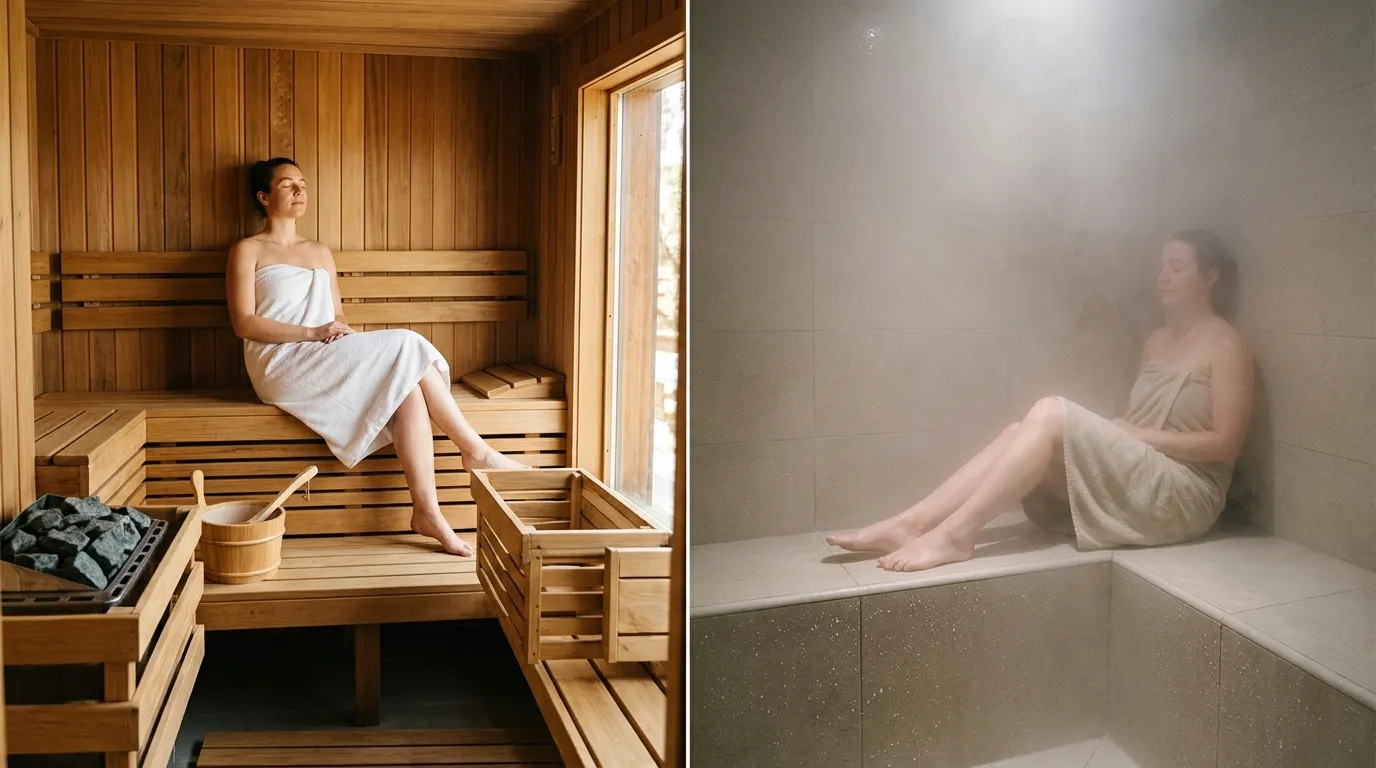
While both saunas and steam rooms utilize thermal therapy to induce heavy sweating, deep relaxation, and cardiovascular stimulation, they operate on completely different thermodynamic principles. The fundamental distinction lies in heat type and relative humidity, which fundamentally dictates how thermal energy is transferred to the body and how human thermoregulatory systems respond.
Part 1: Thermodynamic Mechanisms and Key Differences
Understanding the physiological impact of thermal chambers requires examining how dry heat versus moist heat interacts with human skin and the respiratory tract.
- Traditional Saunas (Dry Heat): Traditional Finnish saunas utilize dry heat generated by heated rocks or electric/wood stoves. Air temperatures are maintained at significantly higher levels—typically ranging from 150°F to 195°F (65°C to 90°C)—while relative humidity remains very low, between 5% and 30%. Because the air is dry, human perspiration evaporates efficiently off the surface of the skin. This rapid evaporation acts as a cooling mechanism, allowing the body to tolerate extremely high ambient air temperatures without dangerously elevating core body temperature during short exposures.
- Steam Rooms (Moist Heat): Steam rooms (or Turkish baths/hummams) operate on a completely different thermal model. A steam generator boils water and pumps saturated vapor into an enclosed, tiled room. Consequently, air temperatures are much lower—ranging from 110°F to 120°F (43°C to 49°C)—while relative humidity reaches nearly 100%. Because the surrounding air is completely saturated with water vapor, sweat cannot evaporate from the skin. The body loses its primary cooling mechanism, forcing the cardiovascular and thermoregulatory systems to work substantially harder to manage internal heat load.
Comparison of Thermal Chambers
| Feature | Traditional Dry Sauna | Steam Room (Wet Heat) |
|---|---|---|
| Primary Heat Source | Wood, electric stove, or heated stones | Steam generator / boiling water |
| Air Temperature | High: 150°F – 195°F (65°C – 90°C) | Moderate: 110°F – 120°F (43°C – 49°C) |
| Relative Humidity | Low: 5% to 30% | Saturated: Nearly 100% |
| Thermoregulation | Evaporative cooling via natural sweat evaporation | Condensation on skin; no sweat evaporation |
| Primary Physical Sensations | Prickling dry heat, deep tissue warming | Heavy enveloping moisture, gentle ambient air |
Part 2: Unique Physiological Benefits
1. Cardiovascular Conditioning and Cellular Repair in Saunas
Extensive clinical research—most notably long-term prospective cohort studies from the University of Eastern Finland—demonstrates that regular sauna bathing offers profound cardiovascular benefits.
- Vascular Function and Heart Rate: The intense dry heat causes cutaneous vasodilation (widening of blood vessels near the skin surface) to dissipate heat. Heart rate increases significantly, frequently mirroring the cardiovascular workload of moderate-intensity exercise (ranging from 100 to 150 beats per minute). This repeated vascular conditioning improves endothelial function and arterial compliance over time.
- Heat Shock Proteins (HSPs): Exposure to high dry heat stimulates the cellular synthesis of heat shock proteins. HSPs act as molecular chaperones, assisting in protein folding, repairing damaged cellular structures, and bolstering systemic cellular resilience against oxidative stress and systemic inflammation.
2. Respiratory Support and Epidermal Hydration in Steam Rooms
The saturated atmosphere of a steam room provides targeted therapeutic advantages that differ markedly from dry heat.
- Mucociliary Clearance: The 100% humidity environment delivers warm, moisture-laden air directly into the respiratory tract. This thins mucus secretions, opens constricted nasal passages, and provides temporary relief from seasonal allergies, chronic bronchitis, and sinus congestion.
- Skin Hydration and Pore Cleansing: While dry sauna air can sometimes dehydrate the outer epidermal layer if sessions are prolonged, a steam room bathes the skin in continuous condensation. This hydrates the stratum corneum, temporarily softens keratinized skin cells, and aids in flushing out surface sebum and particulate debris as pores dilate.
Part 3: Step-by-Step Practical Protocol
To maximize therapeutic gains while minimizing the risk of dehydration, heat exhaustion, or cardiovascular strain, practitioners should follow a structured protocol:
-
Pre-Session Hydration: Drink 16 to 24 ounces of water at least 30 minutes before entering either thermal chamber. Adequate baseline hydration is mandatory to offset anticipated fluid losses through profuse sweating.
-
Strict Time Management:
- Novice Users: Limit initial sessions to 8 to 10 minutes to assess personal heat tolerance.
- Experienced Users: Maintain a maximum duration of 15 to 20 minutes per single session. Avoid chaining multiple back-to-back sessions without adequate cooling breaks.
-
Mindful Monitoring: Pay close attention to physiological warning signs. Because steam rooms inhibit sweat evaporation, heat stress accumulates rapidly. If you experience dizziness, lightheadedness, nausea, or a rapid, pounding pulse, exit the chamber immediately.
-
Gradual Cool-Down and Replenishment: Upon exiting, take a cool or lukewarm shower to assist core temperature normalization. Rehydrate with water or an electrolyte solution containing sodium and potassium. Never consume alcohol immediately before or after heat therapy, as alcohol compounds systemic dehydration and vasodilation risks.
Part 4: Decision Framework: Which One Should You Choose?
- Choose a Traditional Sauna if: Your primary objectives are cardiovascular conditioning, deep musculoskeletal recovery after heavy physical exertion, systemic stress reduction, or participating in a traditional dry-heat wellness ritual.
- Choose a Steam Room if: You are managing upper respiratory congestion, seeking sinus relief, looking to deeply hydrate your epidermis, or prefer a lower ambient air temperature that still induces heavy perspiration.
Sources
- JAMA Internal Medicine – "Association Between Sauna Bathing and Fatal Cardiovascular and All-Cause Mortality Events"
- Mayo Clinic Proceedings – "Cardiovascular and Other Health Benefits of Sauna Bathing: A Review of the Evidence"
- European Respiratory Journal – "Effects of Moist Heat and Steam Inhalation on Nasal Airflow and Mucociliary Clearance"
- American Journal of Physiology – "Human Thermoregulation and Cardiovascular Adjustments to Dry Versus Humid Heat Stress"