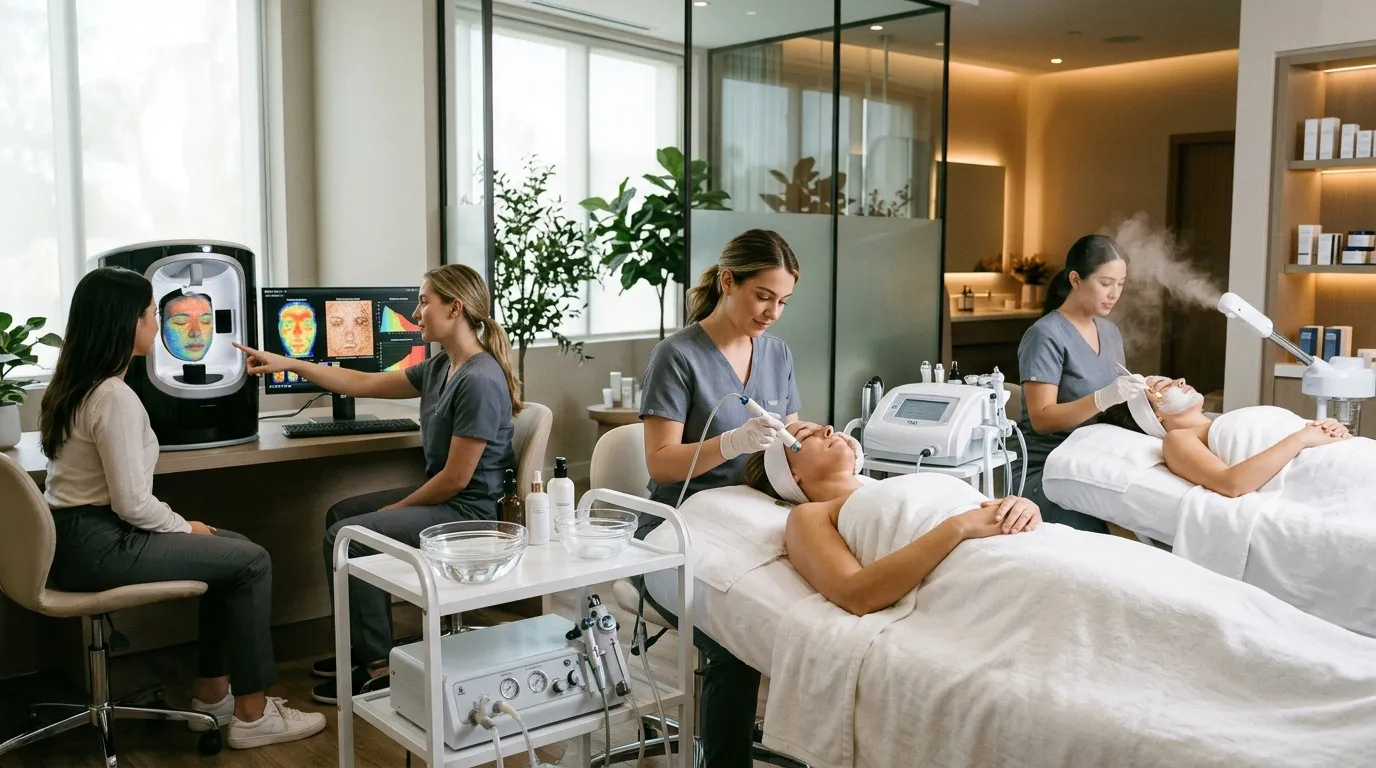
Navigating the spectrum of professional facial treatments requires looking beyond marketing terms to understand the physiological mechanism of each procedure. Whether addressing hyperpigmentation, textural irregularities, congested pores, or loss of collagen density, selecting the correct clinical facial depends entirely on your baseline skin type, barrier integrity, and specific dermatological goals.
Part 1: Major Categories of Professional Facial Treatments
Professional facials generally fall into four distinct categories based on their primary mechanism of action:
- 1. Medical-Grade Chemical Peels (AHA / BHA / TCA): Utilizing acid solutions of varying concentrations (such as glycolic, lactic, salicylic, or trichloroacetic acid), chemical peels disrupt the intercellular cement holding dead corneocytes together. This accelerates desquamation, stimulates cellular turnover, and clears follicular impactions.
- 2. Mechanical Exfoliation & Infusion (HydraFacial / Microdermabrasion): These treatments combine mechanical abrasion or controlled fluid vortex extraction with simultaneous serum infusion. They physically dislodge debris, clear sebum plugs, and flood the stratum corneum with humectants and antioxidants.
- 3. Energy-Based Resurfacing (Microneedling & Laser Facials): Inducing controlled micro-injuries via fine sterile needles or targeted laser wavelengths, these treatments trigger the dermal wound-healing cascade, stimulating fibroblasts to synthesize new collagen and elastin.
- 4. Biochemical / Enzymatic Facials: Utilizing fruit enzymes (such as papain or bromelain) or gentle botanical extracts, these non-acidic treatments dissolve surface keratin proteins without altering skin pH, making them ideal for ultra-sensitive or reactive skin.
Part 2: Comparative Breakdown of Popular Facials
| Treatment Type | Primary Mechanism | Best Suited For | Typical Downtime | Ideal Frequency |
|---|---|---|---|---|
| Enzyme / Botanical Facial | Gentle enzymatic protein digestion | Sensitive, rosacea-prone, or inflamed skin | None | Every 3 to 4 weeks |
| HydraFacial (Vortex Infusion) | Vacuum suction extraction + serum infusion | Congested pores, dullness, dehydration | None (immediate glow) | Monthly |
| Chemical Peel (Glycolic / Lactic) | Acid-based intercellular desquamation | Hyperpigmentation, fine lines, uneven texture | 2 to 5 days of mild flaking | Every 4 to 6 weeks |
| Microneedling (Collagen Induction) | Mechanical micro-injuries in the dermis | Acne scarring, textural laxity, fine lines | 24 to 72 hours of redness | Every 4 to 6 weeks (series of 3–6) |
Part 3: Step-by-Step Selection Framework
-
Assess Your Immediate Skin Barrier Status: If your skin is stinging, flaky, or actively inflamed, skip exfoliating peels or microneedling. Prioritize a barrier-repairing enzyme or hydrating infusion facial.
-
Identify Your Core Skin Objective:
- If your goal is instant hydration and pore clarity before an event, opt for a HydraFacial.
- If your goal is fading sun spots and brightening uneven tone, choose a chemical peel.
- If your goal is long-term collagen remodeling and scar reduction, choose microneedling.
-
Commit to Post-Treatment Care: Professional facials temporarily alter the stratum corneum barrier. Strict daily broad-spectrum SPF (SPF 30+) and the avoidance of active retinoids for 48 to 72 hours post-treatment are mandatory to prevent post-inflammatory hyperpigmentation.
Frequently Asked Questions (FAQ)
Can professional facials cause purging? Yes. Deep cleansing or exfoliating treatments (like chemical peels or HydraFacials) accelerate cell turnover, bringing micro-comedones and underlying congestion to the surface faster than normal. This temporary breakout ("purging") typically subsides within 7 to 10 days.
How long do the results of a HydraFacial last? Immediate hydration and radiance typically last 5 to 7 days, aligning with the natural skin cell desquamation cycle. For sustained improvements in skin clarity and texture, monthly treatments are recommended.
Are chemical peels safe for darker skin tones? Yes, but formulation selection is critical. While deep TCA peels carry a higher risk of post-inflammatory hyperpigmentation in Fitzpatrick skin types IV through VI, superficial lactic, mandelic, or low-percentage glycolic peels performed by an experienced aesthetician are safe and highly effective.
Sources & Further Reference
- American Academy of Dermatology (AAD) – Chemical Peels and Resurfacing Procedures Guidelines
- Journal of Clinical and Aesthetic Dermatology – Efficacy of Microdermabrasion and Vortex Extraction in Acne Management
- Plastic and Reconstructive Surgery Journal – Collagen Induction Therapy and Microneedling Mechanisms