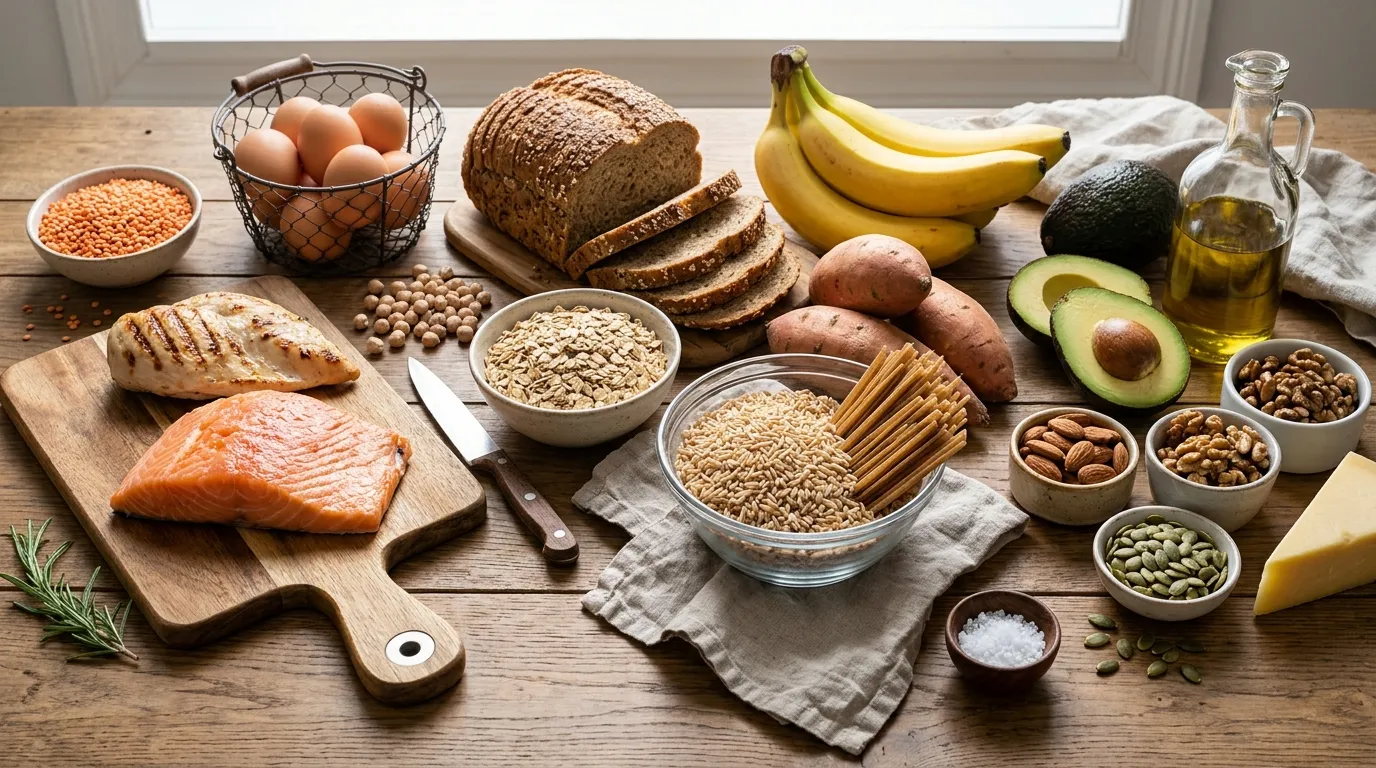
When discussing nutrition, energy balance, and body composition, everything traces back to macronutrients (frequently referred to as "macros"). Unlike micronutrients (vitamins and minerals), which are required in minute quantities, macronutrients are the three foundational nutrient classes that your body needs in large amounts to supply energy, build and repair tissue, and regulate critical metabolic and hormonal processes.
Understanding how protein, carbohydrates, and fats function individually—and how they work together synergistically—is the cornerstone of designing any sustainable nutrition strategy.
Part 1: Protein — The Structural and Functional Building Block
Composed of long chains of amino acids, protein is essential for almost every biological structure and chemical reaction in the human body.
- Primary Roles: Protein provides the structural building blocks for skeletal muscle, skin, hair, nails, organs, and connective tissue. It is also required to synthesize enzymes, peptide hormones, and antibodies that support immune defense.
- Caloric Value: Protein yields approximately 4 calories per gram.
- Amino Acids as Essential Nutrients: Of the 20 standard amino acids, 9 are considered "essential," meaning the human body cannot synthesize them internally; they must be obtained through dietary sources. Complete proteins (such as meat, poultry, fish, eggs, dairy, and soy) contain adequate amounts of all nine essential amino acids.
Part 2: Carbohydrates — The Preferred Energy Substrate
Carbohydrates are organic molecules composed of carbon, hydrogen, and oxygen, broken down primarily into glucose to fuel cellular respiration, brain function, and high-intensity physical activity.
- Primary Roles: Glucose is the central nervous system's preferred energy source. Carbohydrates are stored in the liver and skeletal muscles as glycogen. Dietary carbohydrates also provide dietary fiber, which is non-digestible plant matter vital for gastrointestinal motility, microbiome health, and metabolic regulation.
- Caloric Value: Carbohydrates yield approximately 4 calories per gram.
- Simple vs. Complex Carbohydrates: Simple carbs (sugars) digest rapidly and cause sharp blood glucose fluctuations, whereas complex carbs (starches and whole grains) digest slowly, providing sustained energy release alongside fiber and micronutrients.
Part 3: Fats (Lipids) — Hormonal Regulation and Cellular Integrity
Dietary fats are concentrated energy sources composed of fatty acids attached to a glycerol backbone. Far from being something to avoid, fats are critical for survival and metabolic health.
- Primary Roles: Fats form the protective phospholipid bilayer of every cell membrane in your body, cushion vital organs, facilitate the absorption of fat-soluble vitamins (A, D, E, and K), and serve as the foundational precursors for steroid hormones, including testosterone and estrogen.
- Caloric Value: Fats are the most energy-dense macronutrient, yielding 9 calories per gram—more than double the energy density of proteins and carbohydrates.
- Types of Fat:
- Unsaturated Fats (Monounsaturated and Polyunsaturated): Found in olive oil, avocados, nuts, seeds, and fatty fish; highly beneficial for cardiovascular health.
- Saturated Fats: Found in animal products and tropical oils; best consumed in moderation.
- Trans Fats: Industrially produced hydrogenated oils; strongly linked to adverse cardiovascular risks and inflammation.
Comparison of the Three Macronutrients
| Macronutrient | Energy Density | Primary Physiological Function | Common Dietary Sources |
|---|---|---|---|
| Protein | 4 kcal / gram | Tissue repair, enzyme/hormone synthesis, muscle retention | Chicken, fish, eggs, tofu, Greek yogurt, lentils |
| Carbohydrates | 4 kcal / gram | Rapid cellular energy, brain fuel, digestive fiber | Oats, brown rice, sweet potatoes, fruits, vegetables |
| Fats (Lipids) | 9 kcal / gram | Hormone production, cell membrane integrity, vitamin absorption | Olive oil, avocados, salmon, nuts, chia seeds |
Step-by-Step Approach to Balancing Your Macros
- Establish Your Total Caloric Target: Determine your Total Daily Energy Expenditure (TDEE) based on your body weight, daily activity level, and goals (fat loss, maintenance, or muscle gain).
- Prioritize Protein First: Set your daily protein target based on your activity level and body composition goals (typically ranging from 1.6 to 2.2 grams per kilogram of body weight).
- Allocate Minimum Dietary Fat: Reserve at least 20% to 30% of your total daily calories for healthy fats to ensure proper hormonal balance and nutrient absorption.
- Fill the Remainder with Carbohydrates: Distribute the remaining caloric budget into carbohydrates to fuel your daily energy demands and physical workouts.
Frequently Asked Questions (FAQ)
Are low-carbohydrate diets superior for fat loss? No. Extensive clinical research demonstrates that when total protein intake and total caloric deficits are matched, low-carbohydrate and low-fat diets yield virtually identical fat loss results. The "best" macro split is the one that you can adhere to consistently while supporting your performance and satiety.
Why do fats have more than twice the calories of protein and carbs? Chemically, fatty acid chains contain a much higher ratio of carbon-to-oxygen bonds, allowing them to store significantly more chemical energy per unit of mass than carbohydrates or proteins.
Can you eliminate carbohydrates entirely from your diet? While the human body can manufacture glucose via gluconeogenesis (converting non-carbohydrate precursors like amino acids and glycerol into glucose), strict carbohydrate elimination is unnecessary for most people and can impair high-intensity athletic performance and fiber intake.
Sources & Further Reference
- Institute of Medicine (Food and Nutrition Board) – Dietary Reference Intakes for Energy, Carbohydrate, Fiber, Fat, Fatty Acids, Cholesterol, Protein, and Amino Acids
- Academy of Nutrition and Dietetics – Macronutrient Guidelines and Health Fundamentals
- World Health Organization (WHO) – Healthy Diet and Nutritional Science Fact Sheets