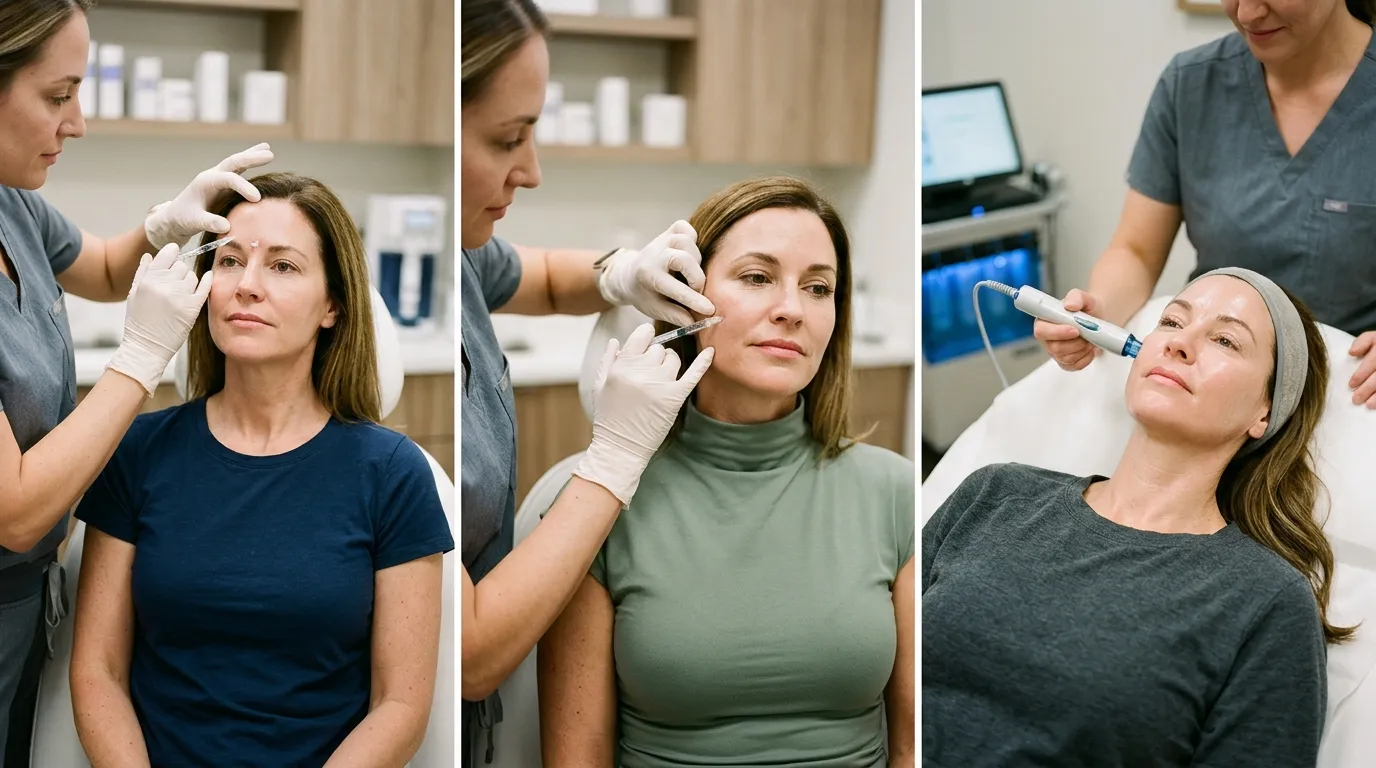
As aesthetic medicine continues to evolve, patients have access to an extensive array of non-surgical and minimally invasive treatments designed to refresh facial appearance, smooth dynamic lines, and restore lost volume. However, navigating the differences between neuromodulators, dermal fillers, and advanced skin rejuvenation therapies can be confusing.
Each modality targets entirely different physiological layers of the skin and underlying facial structures. Understanding how these treatments work allows for precise, goal-oriented aesthetic planning.
Part 1: Neuromodulators (Botox, Dysport, Jeuveau)
Neuromodulators are purified proteins derived from botulinum toxin type A. Their primary function is to temporarily relax targeted facial muscles.
- Mechanism of Action: When injected into specific facial muscles, neuromodulators block the release of acetylcholine at the neuromuscular junction. This prevents the muscle from contracting forcefully when you make facial expressions.
- Primary Indications: They are used to treat dynamic wrinkles—lines caused by repetitive muscle movement over time. Common treatment areas include glabellar lines (frown lines between the eyebrows), horizontal forehead lines, and crow's feet around the eyes.
- Duration of Results: Typically lasts 3 to 4 months, after which muscular function and movement gradually return as new nerve endings sprout.
Part 2: Dermal Fillers (Hyaluronic Acid and Biostimulators)
Unlike neuromodulators that relax muscles, dermal fillers are gel-like substances designed to restore lost volume, fill deep folds, and sculpt facial contours.
- Mechanism of Action: The vast majority of modern fillers are composed of Hyaluronic Acid (HA)—a naturally occurring sugar molecule in the body that attracts and binds water to provide immediate plumping and hydration. Other biostimulatory fillers (such as calcium hydroxylapatite or poly-L-lactic acid) work by actively stimulating the body’s own collagen production over several months.
- Primary Indications: They treat static wrinkles (lines visible even when the face is at rest), loss of facial volume, hollow temples, thinning lips, deep nasolabial folds, and receding jawlines.
- Duration of Results: Depending on the product density and treatment area, HA fillers last anywhere from 6 to 18 months, while biostimulators can persist for up to 2 years.
Part 3: Skin Rejuvenation (Lasers, Energy Devices, and Chemical Peels)
Skin rejuvenation encompasses treatments that target the epidermis and superficial dermis to improve overall skin texture, tone, and collagen density.
- Mechanism of Action: These modalities—ranging from fractional laser resurfacing and intense pulsed light (IPL) to microneedling and medical-grade chemical peels—create controlled micro-injuries or deliver thermal energy into the skin. This triggers the body’s natural wound-healing cascade, stimulating fibroblasts to synthesize new collagen and elastin fibers while clearing pigmented lesions.
- Primary Indications: Fine surface lines, sun damage, hyperpigmentation, melasma, acne scarring, rough skin texture, and diffuse redness.
- Duration of Results: Results are cumulative and long-lasting, especially when maintained with a rigorous daily skincare regimen and strict daily sun protection (SPF).
Comparison of Aesthetic Treatment Categories
| Treatment Category | Primary Physiological Target | Main Aesthetic Goal | Average Longevity |
|---|---|---|---|
| Neuromodulators (Botox) | Facial musculature | Smooth expression lines / dynamic wrinkles | 3 to 4 months |
| Dermal Fillers | Subdermal fat and bone planes | Restore volume, fill folds, and contour structure | 6 to 18+ months |
| Skin Rejuvenation (Lasers/Peels) | Epidermis and superficial dermis | Improve skin texture, tone, and surface pigment | Cumulative / Long-term |
Step-by-Step Approach to Selecting Your Treatment Strategy
-
Diagnose Your Concern in a Mirror:
- Do lines disappear when your face is completely relaxed? If yes, you are dealing with dynamic lines best addressed by neuromodulators.
- Are folds or shadows visible even at rest due to sagging or volume loss? If yes, you are dealing with structural volume deficits best addressed by fillers.
- Is your concern related to surface texture, discoloration, or dullness rather than lines? Look toward skin rejuvenation.
-
Consult a Board-Certified Specialist: Aesthetic anatomy is exceptionally complex. A qualified dermatologist or plastic surgeon can assess your facial vector aging, skin thickness, and muscle pull to design a balanced, natural-looking plan.
-
Prioritize Skin Health First: Quality topical skincare (retinoids, antioxidants, and daily SPF) forms the foundation of any long-term aesthetic plan, enhancing and protecting the results of in-office procedures.
Frequently Asked Questions (FAQ)
Can I get Botox and dermal fillers on the same day? Yes. It is very common for practitioners to combine neuromodulators and fillers in a single treatment session (often referred to as a liquid facelift) because they treat entirely different underlying issues.
Do dermal fillers migrate over time? While high-quality hyaluronic acid fillers stay localized when placed correctly by an expert injector, improper placement, over-filling, or highly mobile areas can occasionally lead to minor product displacement. Choosing an experienced injector minimizes this risk.
Will laser skin resurfacing thin my skin? No. Ablative and non-ablative laser resurfacing actually thickens the dermis over time by stimulating new collagen and elastin synthesis, resulting in firmer, more resilient skin.
Sources & Further Reference
- American Society of Plastic Surgeons (ASPS) – Procedural Guidelines for Minimally Invasive Treatments
- Journal of Clinical and Aesthetic Dermatology – Comparative Analysis of Facial Rejuvenation Modalities
- American Academy of Dermatology (AAD) – Understanding Injectables and Laser Treatments