Spa treatments offer more than temporary relaxation; they serve as purposeful therapeutic interventions designed to relieve muscular tension, accelerate cellular turnover, support lymphatic drainage, and restore skin barrier function.
Understanding the physiological mechanisms and target benefits of each treatment ensures you select the right service for your specific wellness and skincare objectives.
1. Swedish Massage
The Swedish massage is the foundational modality of Western massage therapy, utilizing smooth, flowing strokes, kneading, and circular friction.
- Mechanism of Action: Long, gliding strokes (effleurage) follow the direction of blood returning to the heart, enhancing venous and lymphatic circulation while activating parasympathetic nervous system receptors.
- Primary Benefits: Reduces systemic cortisol levels, relieves mild muscular tension, improves joint flexibility, and promotes deep nervous system relaxation.
- Best Suited For: First-time spa visitors, general stress relief, and post-travel fatigue.
2. Deep Tissue Massage
Deep tissue massage focuses on realigning deeper layers of muscles and connective tissue (fascia) using slow, deliberate strokes and direct, sustained pressure.
- Mechanism of Action: High-pressure mechanical friction breaks down fibrous adhesions (scar tissue) and chronic muscle knots, increasing localized blood flow to oxygenate ischemic (oxygen-deprived) tissue.
- Primary Benefits: Alleviates chronic musculoskeletal pain, improves postural alignment, and accelerates recovery from intense athletic training.
- Best Suited For: Athletes, individuals with chronic lower back or shoulder tension, and those recovering from physical strain.
3. Hot Stone Massage
Hot stone massage integrates smooth, heated basalt stones placed along key energy points of the body or used directly as massage extensions.
- Mechanism of Action: Thermotherapy from the heated stones causes immediate local vasodilation, allowing blood vessels to expand and flooding deep muscle tissues with oxygen and nutrients without requiring forceful pressure.
- Primary Benefits: Induces profound relaxation, melts deep-seated muscle tension, and soothes nervous system hypersensitivity.
- Best Suited For: Individuals who find deep tissue massage too intense, those sensitive to cold, and deep stress management.
4. Aromatherapy Massage
Aromatherapy combines Swedish massage techniques with the targeted application of volatile botanical essential oils diluted in lipid carrier oils.
- Mechanism of Action: Lipophilic essential oil molecules are simultaneously absorbed topically through the skin barrier and inhaled via olfactory receptors, stimulating the limbic system to regulate emotional responses and autonomic arousal.
- Primary Benefits: Delivers targeted psychological and physiological effects (such as lavender for anxiety reduction or eucalyptus for respiratory clarity) alongside standard muscular relaxation.
- Best Suited For: Stress reduction, mood enhancement, and sensory balancing.
5. Hydrotherapy Body Scrub and Polish
A body scrub is an exfoliating treatment utilizing granular agents (such as sea salt, crushed walnut shells, or fine sugar) suspended in hydrating oils.
- Mechanism of Action: Mechanical friction rapidly sloughs off dead, keratinized corneocytes from the stratum corneum, accelerating cellular turnover and exposing fresh epidermal layers.
- Primary Benefits: Smoothes rough skin texture, removes buildup, enhances the systemic absorption of subsequent moisturizers, and stimulates microcirculation.
- Best Suited For: Pre-vacation tanning prep, dry winter skin, and whole-body exfoliation.
6. Detoxifying Body Wrap (Mud, Clay, or Algae)
Body wraps involve coating the body in mineral-rich muds, volcanic clays, or marine algae, followed by cocooning the client in warm thermal blankets.
- Mechanism of Action: Occlusion and sustained heat induce profuse perspiration, while mineral-dense marine extracts or clays draw out surface impurities and deliver trace elements across the skin barrier via passive diffusion.
- Primary Benefits: Temporarily tightens skin appearance, boosts local circulation, assists with fluid retention, and softens rough skin.
- Best Suited For: Pre-event toning, metabolic reset, and deep skin remineralization.
7. Classic European Facial
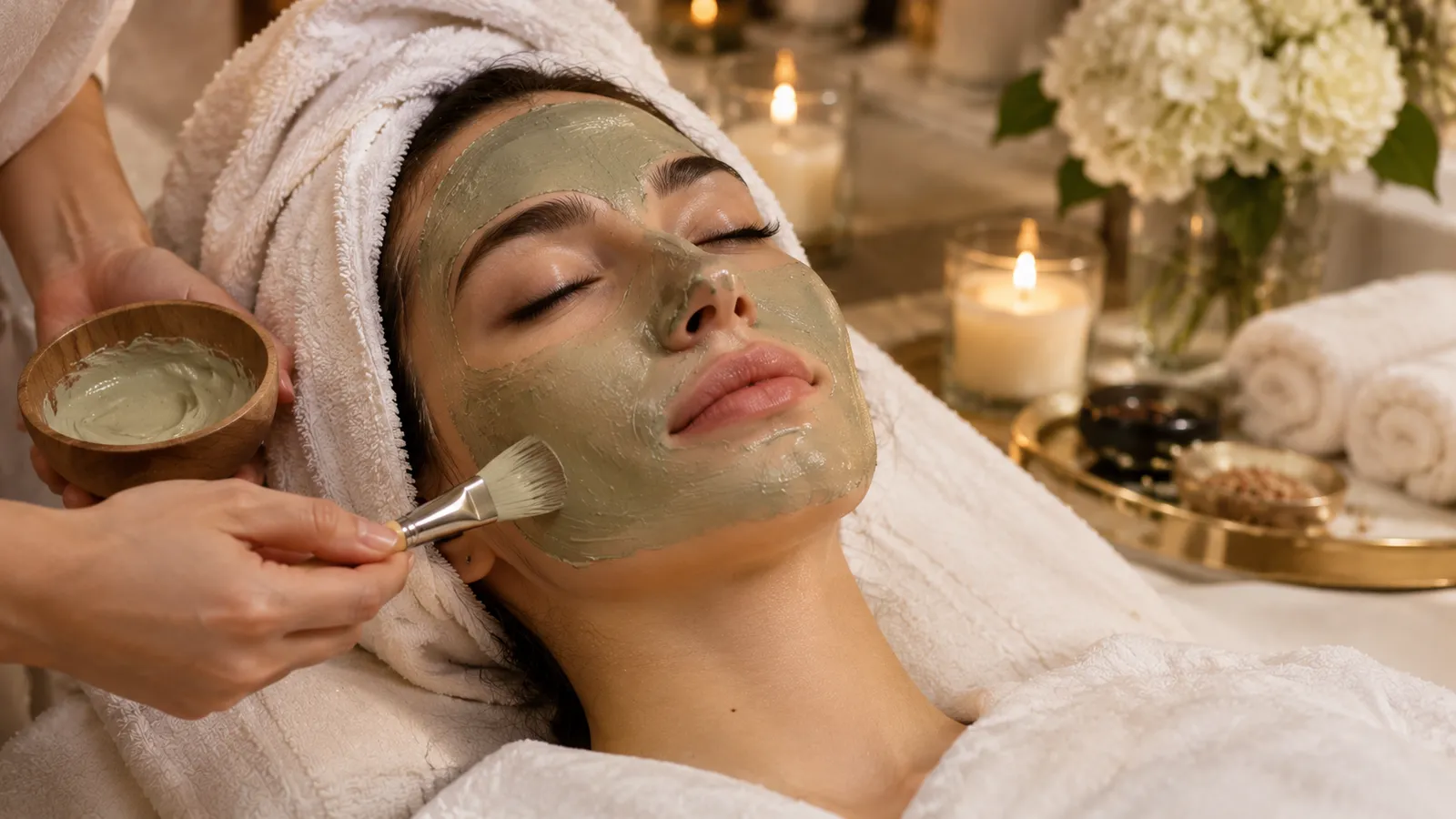
The classic European facial is a multi-step clinical skincare treatment focusing on cleansing, gentle enzymatic or chemical exfoliation, extractions, massage, and targeted masking.
- Mechanism of Action: Controlled steam softens sebum plugs, manual or vacuum extractions clear follicular congestion, and nutrient-dense masks restore skin hydration and barrier lipids.
- Primary Benefits: Clears congested pores, balances epidermal moisture, brightens dull skin tone, and provides customized anti-aging or blemish support.
- Best Suited For: Monthly skin maintenance, congested skin, and foundational barrier care.
8. Advanced Chemical Peel Facial
Medical-grade chemical peels utilize specialized acid solutions (glycolic, lactic, salicylic, or mandelic acid) to dissolve the intercellular cement holding dead skin cells together.
- Mechanism of Action: Controlled chemical keratolysis accelerates desquamation, shedding damaged upper layers and signaling fibroblasts in the dermis to ramp up collagen synthesis.
- Primary Benefits: Fades hyperpigmentation, smooths fine lines, refines acne scars, and evens out overall skin texture.
- Best Suited For: Sun damage, uneven skin tone, aging skin, and persistent hyperpigmentation.
9. Hydrating Micro-Infusion Facial
Micro-infusion treatments (such as HydraFacial protocols) combine vortex suction, multi-step cleansing, and pressurized serum infusion.
- Mechanism of Action: Vacuum suction gently lifts debris out of pores while simultaneously saturating the newly cleaned skin with high-potency humectants, antioxidants, and peptides.
- Primary Benefits: Delivers immediate plumping and radiance with zero downtime, deeply hydrates the stratum corneum, and clears surface impurities.
- Best Suited For: Pre-event glowing skin, dehydrated skin types, and sensitive skin needing gentle extraction.
10. Reflexology (Foot and Hand Therapy)
Reflexology is a specialized pressure-point therapy focused on specific reflex zones located on the feet, hands, and ears that correspond to internal organs and bodily systems.
- Mechanism of Action: Targeted thumb and finger compression stimulates peripheral nerve endings, sending neural signals down the spinal pathway to encourage relaxation and homeostasis in corresponding visceral areas.
- Primary Benefits: Relieves foot fatigue, reduces systemic stress, promotes deep nervous system down-regulation, and improves local circulation.
- Best Suited For: Individuals on their feet all day, stress relief, and holistic whole-body balancing.
Comparison of Popular Spa Treatments
| Treatment Category | Primary Mechanism | Key Benefit | Typical Duration |
|---|---|---|---|
| Swedish Massage | Effleurage & circulatory stimulation | Systemic stress & muscle relaxation | 60 to 90 minutes |
| Deep Tissue Massage | Deep mechanical pressure on fascia | Relief from chronic knots & muscle pain | 60 to 90 minutes |
| Hot Stone Massage | Thermotherapy via heated basalt stones | Deep tissue warming without heavy pressure | 75 to 90 minutes |
| Body Scrub & Polish | Mechanical epidermal exfoliation | Smooths skin texture & removes dead cells | 45 to 60 minutes |
| Detoxifying Mud Wrap | Occlusive thermal sweating & minerals | Skin tightening, remineralization, & purging | 60 to 90 minutes |
| Classic European Facial | Multi-step cleansing, extraction, & mask | Pore clarity, barrier balance, & hydration | 60 minutes |
| Advanced Chemical Peel | Acid keratolysis & cellular turnover | Fades hyperpigmentation & refines texture | 30 to 45 minutes |
| Hydrating Micro-Infusion | Vacuum extraction + serum infusion | Instant hydration and radiant glow | 45 to 60 minutes |
| Reflexology | Nerve-ending pressure point stimulation | Whole-body relaxation via reflex zones | 30 to 60 minutes |
Sources & Further Reference
- International Journal of Therapeutic Massage & Bodywork – Physiological Effects of Massage Therapy and Circulation
- American Academy of Dermatology (AAD) – Clinical Guidelines on Chemical Peels and Exfoliation Safety
- Journal of Clinical and Aesthetic Dermatology – Efficacy of Barrier-Repair Facials and Hydrodermabrasion